Retirement Calculator Tool – Estimate Your Future Savings
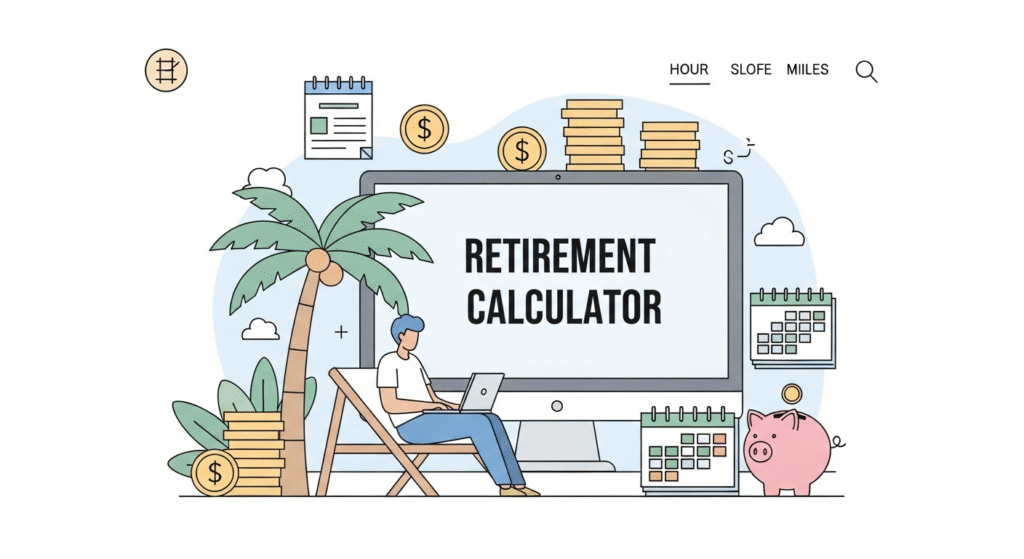
Planning for retirement can feel overwhelming, but having the right financial tools makes the process much easier. Our Retirement Calculator Tool helps you estimate your total retirement savings by considering your current age, target retirement age, existing savings, monthly contributions, and expected annual return. This free and easy-to-use calculator gives you a clear projection of your financial future, empowering you to make smarter investment and savings decisions today.
Retirement Calculator
📋 Result
Estimated Retirement Savings
$0
—
💡 What is a Retirement Calculator?
A retirement calculator is a financial tool designed to help individuals project their savings at retirement. By inputting simple details like your current savings, expected contributions, and investment growth rate, you can estimate how much money you’ll have when you retire. This helps you evaluate whether your current plan is sufficient or if you need to adjust contributions or investment strategies.
⚡ Why Use a Retirement Calculator?
Retirement planning is one of the most important financial decisions you’ll ever make. A calculator helps you:
- ✅ Estimate future savings: See how much you’ll have by retirement.
- ✅ Identify gaps: Find out if your current plan will meet your retirement needs.
- ✅ Test scenarios: Adjust your savings rate, age, or investment returns to see different outcomes.
- ✅ Stay motivated: Visualize your long-term financial goals.
- ✅ Make informed decisions: Balance lifestyle expenses with retirement planning.
🛠️ How to Use the Retirement Calculator
- Enter Current Age: Start with your present age.
- Enter Retirement Age: Choose the age when you want to stop working.
- Input Current Savings: Add any savings or investments you already have.
- Monthly Contribution: Enter how much you plan to save each month.
- Annual Return Rate: Estimate the expected annual return (e.g., 6–8% for long-term investments).
- Calculate: Get your projected retirement savings instantly.
🔑 Example Calculation
Imagine a 30-year-old with $50,000 in savings, contributing $500 per month, and expecting a 7% annual return. By age 65, they could have $1.4 million saved. This shows how small contributions over time, combined with compound growth, can lead to a secure retirement.
📊 Why Start Saving Early?
The earlier you start saving for retirement, the more time your money has to grow. Thanks to compound interest, even small contributions made early in your career can grow into a significant amount over decades. Delaying retirement planning can mean needing to save much more later in life to reach the same goal.
💰 Factors That Impact Retirement Savings
- Current Age: Determines how many years you have to save and invest.
- Retirement Age: A later retirement age gives more time for growth.
- Current Savings: Your existing balance acts as the foundation.
- Monthly Contributions: Regular savings boost your future nest egg.
- Annual Return: Higher returns increase growth, but involve more risk.
- Inflation: The cost of living will affect your purchasing power at retirement.
🛡️ Tips for Effective Retirement Planning
- 🔹 Save consistently every month.
- 🔹 Increase contributions as your income grows.
- 🔹 Diversify investments for balanced risk and return.
- 🔹 Monitor inflation and adjust goals accordingly.
- 🔹 Recalculate regularly to stay on track.
📈 Benefits of Using Our Retirement Calculator
- ✔️ Free and easy to use.
- ✔️ Provides instant savings estimates.
- ✔️ Helps with long-term financial planning.
- ✔️ Encourages disciplined savings habits.
- ✔️ Works across all devices.
❓ Frequently Asked Questions (FAQ)
1. Is the retirement calculator accurate?
Yes, it provides accurate estimates based on your inputs. However, real-life results depend on inflation, market performance, and spending habits.
2. How much should I save for retirement?
Experts suggest saving at least 10–15% of your annual income, but it depends on your lifestyle and retirement goals.
3. What is a good annual return to expect?
Historically, stock market investments average around 7% annually, but actual returns vary.
4. Should I include my pension or social security?
Yes. To get a complete picture, factor in all expected retirement income sources.
5. Can I retire earlier than 65?
Yes, but you’ll need more savings since your retirement period will be longer.
6. How often should I update my retirement plan?
Update it at least once a year or after major life events (job change, marriage, etc.).
7. What if I start saving late?
You’ll need to save more aggressively, invest wisely, and possibly delay retirement.
8. Does inflation affect retirement savings?
Yes, inflation reduces your purchasing power, so plan for a slightly higher target.
9. Is this calculator free?
Yes, our tool is 100% free and requires no registration.
10. Do I need financial advice?
While this tool provides estimates, consulting a financial advisor is recommended for personalized plans.